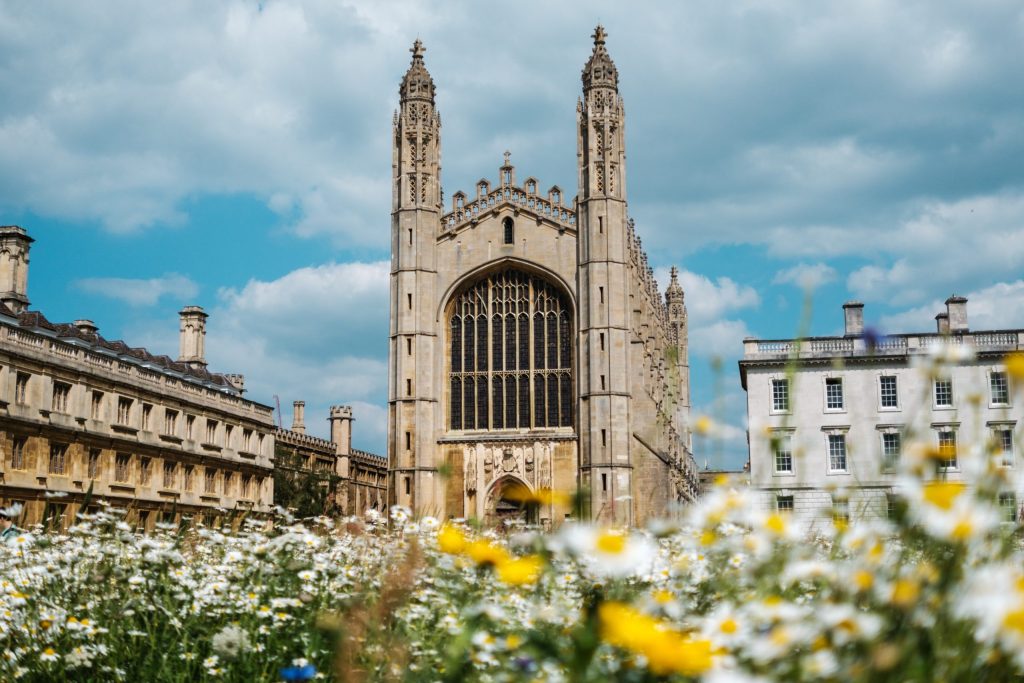
North Carolina State University, founded in 1887 as the state’s first land grant college, has a duty to open the doors of education for everyone and is dedicated to excellent teaching, the creation and application of knowledge, and engagement with public and private partners. By uniting its strength in science and technology with a commitment to excellence in a comprehensive range of disciplines, NC State promotes an integrated approach to problem-solving that transforms lives and provides leadership for social, economic, and technological development across North Carolina and around the world.
NC State University is based in North Carolina’s capital, Raleigh, about halfway down the East Coast of the United States. Being one of the fastest-growing cities in America, you will never have to look far in this city. Entertainment extravaganza? Natural oasis? Perfect climate? The town, also known as the City of Oaks, for its sheer number of majestic oak trees lining the streets, has it all! So say goodbye to boring weekends thanks to hot new restaurants ranging from southern comfort food to world-class cuisine, award-winning museums, major music festivals, and sporting events. Catch live music every night of the week — from local acts to chart-topping performers. Watch the Carolina Hurricanes hit the ice in the PNC Arena. Or take a stroll in the JC Raulston Arboretum, a gorgeous 10-acre botanical garden, and venture through more than 100 miles of greenway trails across the city. Of course, North Carolina’s temperate weather, with an average high of 11°C and an average low of 0°C during winter months and an average high of 31°C and an average low of 19°C during summer months, brings along dreamy spring florals, vibrant fall foliage, and everything in between, making it all possible.
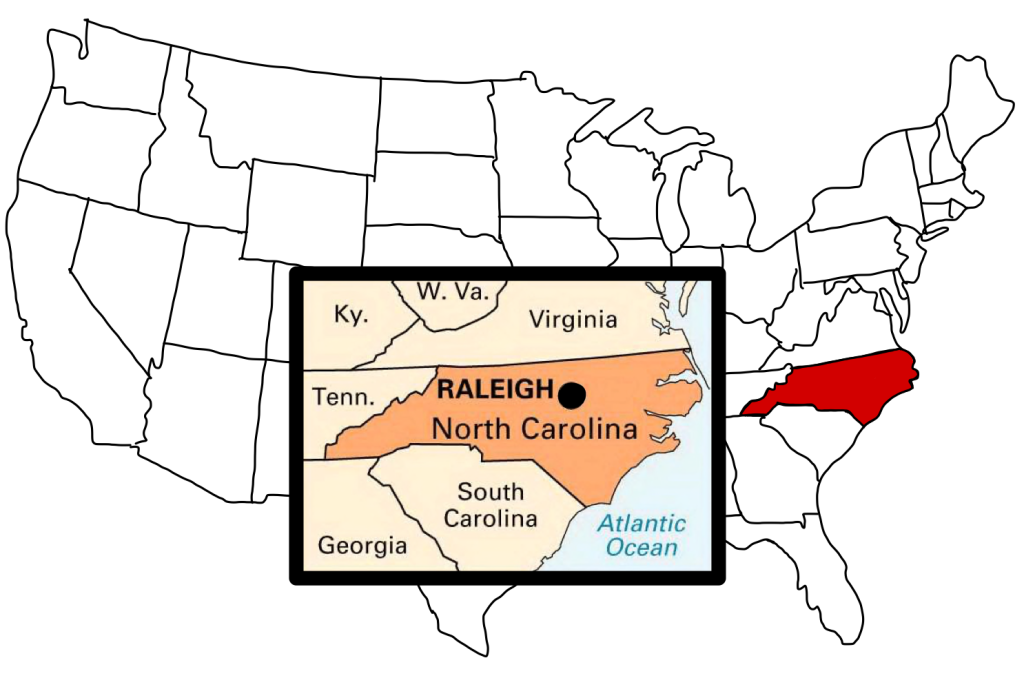
Raleigh-Dunham is home to one of the greatest technological research parks in the world, the Research Triangle Park (RTP). It has more than 200 companies and over 50,000 people with expertise in fields such as biotechnology, pharmaceuticals, microelectronics, chemicals, and environmental sciences.
This highly rated public, comprehensive research university, which ranks within the top one percent of Universities worldwide and sixth for Best Value among public universities nationally, is home to over 37,500 students. An overwhelming percentage of those students say that professors are approachable and helpful when needed (83%) and care about their students‘ success (79%), which is paramount as of its 15:1 student-faculty ratio.
Excelling in science, technology, engineering, and math, but also at the forefront of teaching and research in agriculture, business, design, education, humanities, and social sciences, natural resources, textiles, and veterinary medicine, NC State consists of 12 colleges and 68 departments.
– Agricultural & Human Sciences
– Agricultural & Resource Economics
– Agricultural Institute
– Animal Science
– Applied Ecology
– Biological & Agricultural Engineering
– Crop & Soil Sciences
– Entomology & Plant Pathology
– Food, Bioprocessing, & Nutrition Sciences
– Horticultural Science
– Molecular & Structural Biochemistry
– Plant & Microbial Biology
– Prestage Department of Poultry Science
– Communication
– English
– Foreign Languages & Literatures
– History
– Interdisciplinary Studies
– Philosophy & Religious Studies
– Political Science
– Psychology
– Public Administration
– Social Work
– Sociology and Anthropology
– Forest Biomaterials
– Forestry & Environmental Resources
– Parks, Recreation & Tourism Management
– Textile and Apparel, Technology & Management
– Textile Engineering, Chemistry & Science
– Clinical Sciences
– Molecular Biomedical Sciences
– Population Health & Pathobiology
The Graduate School offers programs in more than 160 areas, plus numerous minors, certificate programs, and interdisciplinary options. Many of these programs are ranked among the nation’s best, providing dynamic research opportunities emphasizing interdepartmental collaboration to give graduate students an outstanding education.
– Architecture
– Art & Design
– Graphic Design
– Industrial Design
– Landscape Architecture & Environmental Planning
– Educational Leadership, Policy, & Human Development
– Science, Technology, Engineering, & Mathematics Education
– Teacher Education & Learning Sciences
– Biological & Agricultural Engineering
– Biomedical Engineering
– Chemical & Biomolecular Engineering
– Civil, Construction & Environmental Engineering
– Computer Science
– Edward P. Fitts Department of Industrial & Systems Engineering
– Electrical & Computer Engineering
– Materials Science & Engineering
– Mechanical & Aerospace Engineering
– Nuclear Engineering
– Accounting
– Business Management
– Economics
– Management, Innovation & Entrepreneurship
– Biological Sciences
– Chemistry
– Marine, Earth, & Atmospheric Sciences
– Mathematics
– Physics
– Statistics
– Air Force ROTC
– Army ROTC
– Dance Program
– Exploratory Studies
– Health & Exercise Studies
– Music
– Naval ROTC
– Theatre
The NC State Wolf Pack’s 23 varsity teams compete in the NCAA Division 1 Atlantic Coast Conference. Overall, the Wolf Pack has won 5 team & 40 individual national championships and a multitude of conference and regional championships.
Baseball
Basketball
Cross Country
Football
Golf
Rifle
Soccer
Swimming & Diving
Tennis
Track & Field
Wrestling
Basketball
Cross Country
Golf
Gymnastics
Rifle
Soccer
Softball
Swimming & Diving
Tennis
Track & Field
Volleyball
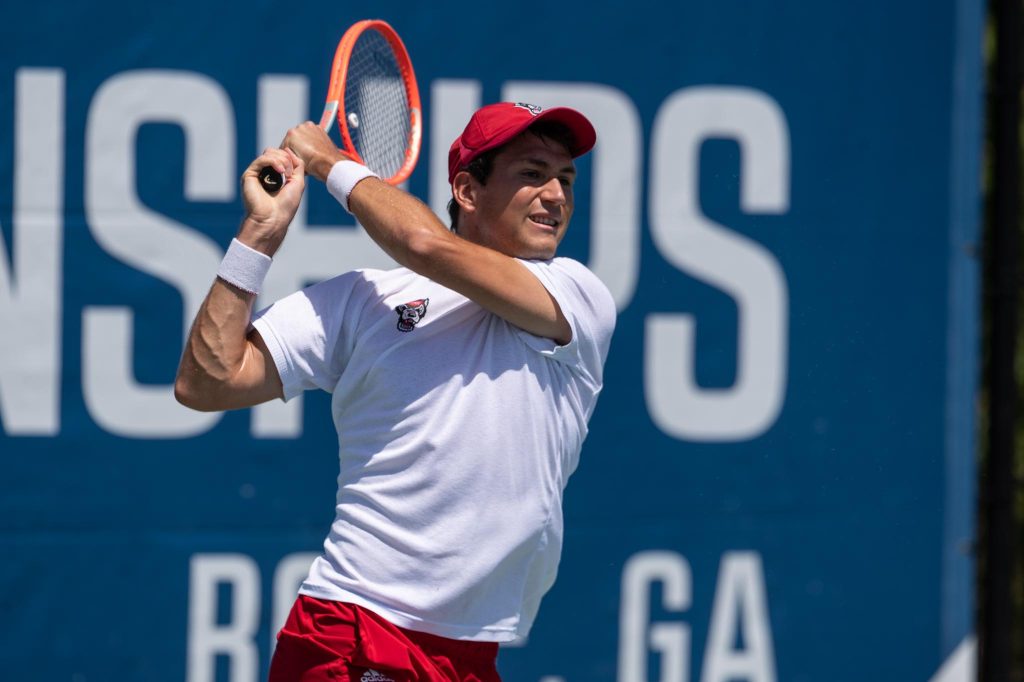
Luca, from Switzerland, has been playing for the Wolf Pack since the Fall of 2021. He has won various awards for and with NC State Pack Tennis, including ACC’s Freshman of the Year award and ITA Carolina Region Rookie of the Year, all while taking on his Bachelor’s in Economics.
The mentality is different. In addition, the team training sessions have a different energy than before, when I was more or less left to my own devices. We also practice doubles regularly, which helps me as an individual player.
Luca Stäheli
If you want to study in a city in the USA that is nationally recognized as a top destination for students and young professionals like North Carolina State University offers, then feel free to contact us.
You might have heard the terms freshman, sophomore, junior, and senior before, but what do they mean, and why does the U.S. use such “weird” terms to describe their students?
A freshman is an undergraduate student in their first year of college.
A sophomore is an undergraduate student in their second year of college.

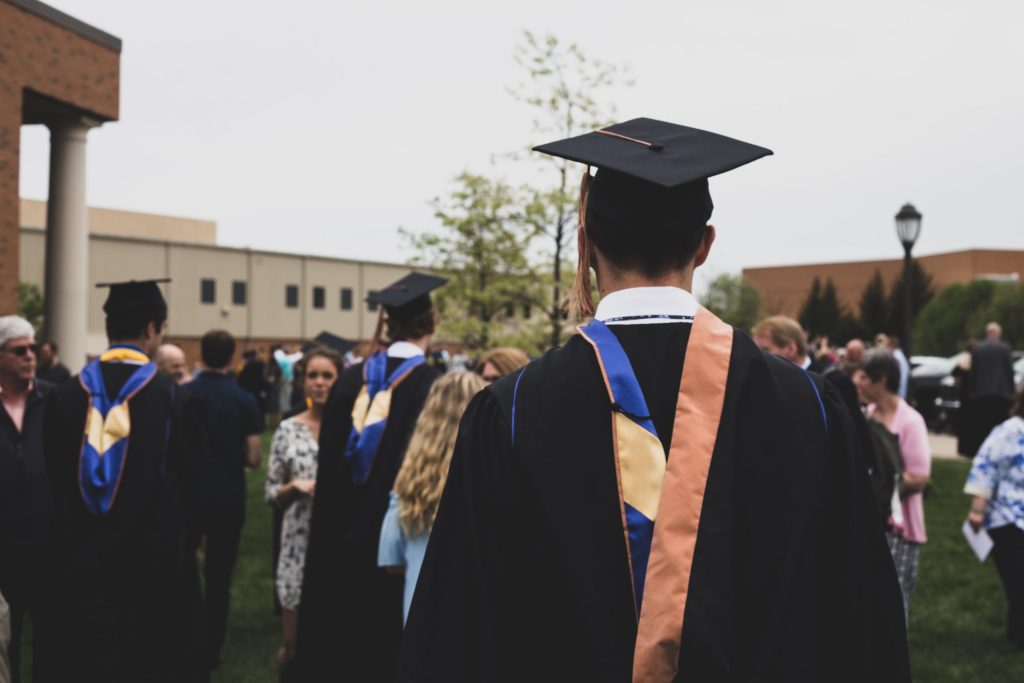
A junior is an undergraduate student in their third year of college.
A Senior is an undergraduate student in their last year of college.
Like many of America’s collegiate traditions, the terms for describing which year of undergraduate education a student is in are rooted in England’s respected universities, Oxford and Cambridge.
Harvard adopted the terms at its establishment in 1636, and most universities and high schools in the United States followed foot.
While this explains why U.S. high schools and colleges use the terms freshman, sophomore, junior, and senior, we will further explore the origin of these terms in the following paragraph.
In the 17th century, new students at respected English universities such as Oxford and Cambridge were called “fresh men,” which then was joined to make the term freshman.
Second-year students were referred to as “sophy more,” which stems from the Greek words for clever or wise (’sophos’) and foolish (’moros’). Merging the two terms created an oxymoron describing second-year students as “wise fools.”
After another year of studies, said “wise fools” graduate to the level of “sophister.” Sophister dates back to the 14th century and means “wise man” or “expert.” This level of study was then further split into two years called junior sophister and senior sophister, later shortened to the terms we have got to know, junior and senior.
If you want to know more about studying in the USA, feel free to contact us.
Summer courses are classes offered at most American colleges and universities during the summer months. Generally, they are short courses that compress the same amount of material that any course during the fall or spring semester covers into a shorter amount of time. While the duration of these class cycles may vary significantly, the typical summer term for most colleges lies between four to six weeks.

Most schools provide a variety of options for students to take classes during the summer, and some degree programs even require students to enroll in a summer session due to the course load. For example, rigorous programs in medical schools and many healthcare fields frequently require students to enroll in courses during the summer. Regardless of your degree program, there are clear advantages for students to enroll in summer courses. However, it’s important to remember to do your research ahead of time and to consider all your options, so you can be sure whether taking a summer class is right for you.
Taking summer classes will help you pace your studies and distribute a potentially heavy course load, preventing you from overloading your fall and spring semesters and making your course load much more bearable, especially during the season. Additionally, taking more challenging courses without a full semester course load in competition for your time and attention will set up for success in the long run.
Taking summer classes is a great way to get general education courses as well as prerequisites out of your way. Because the sooner you finish mandatory classes, the sooner you can take courses within your field of study.
“Some students may want to complete a prerequisite so that they can take another course in the fall, or may want to take a course that wasn’t available another semester.”
Vicki Nelson for CollegeParentCentral.com

While generally, summer classes will be offered both online and in-person, sometimes even as hybrid courses, online courses allow you to complete the coursework from anywhere that has access to the internet, whether the comfort of your own home or the lounge chair at the beach! This is especially beneficial to international students, who may want to spend time with their family at home but also take advantage of their university’s summer classes. While online summer courses are becoming more popular due to their flexible schedule and self-directed nature, be cautious. They are fast-paced, so maybe think twice about which course you want to take over the summer.
“I believe that some students may even learn more during a summer course because it is a shorter time span and they are able to consolidate their learning of a subject instead of spanning it across a semester.”
Dr. Betsy St. Pierre
By enrolling in just one or two summer courses every summer, students can achieve their goals faster and ahead of schedule. In addition, depending on the degree program, students who enroll in summer courses are able to graduate a semester earlier than the regular traditional track schedule. This will not only potentially save you thousands on tuition fees and college costs, but you will have more time to get ahead in your career or have some off time before starting your job after college.
Additionally, if you have fallen behind on credits during the regular semesters or have to re-take a class, summer is the perfect time.
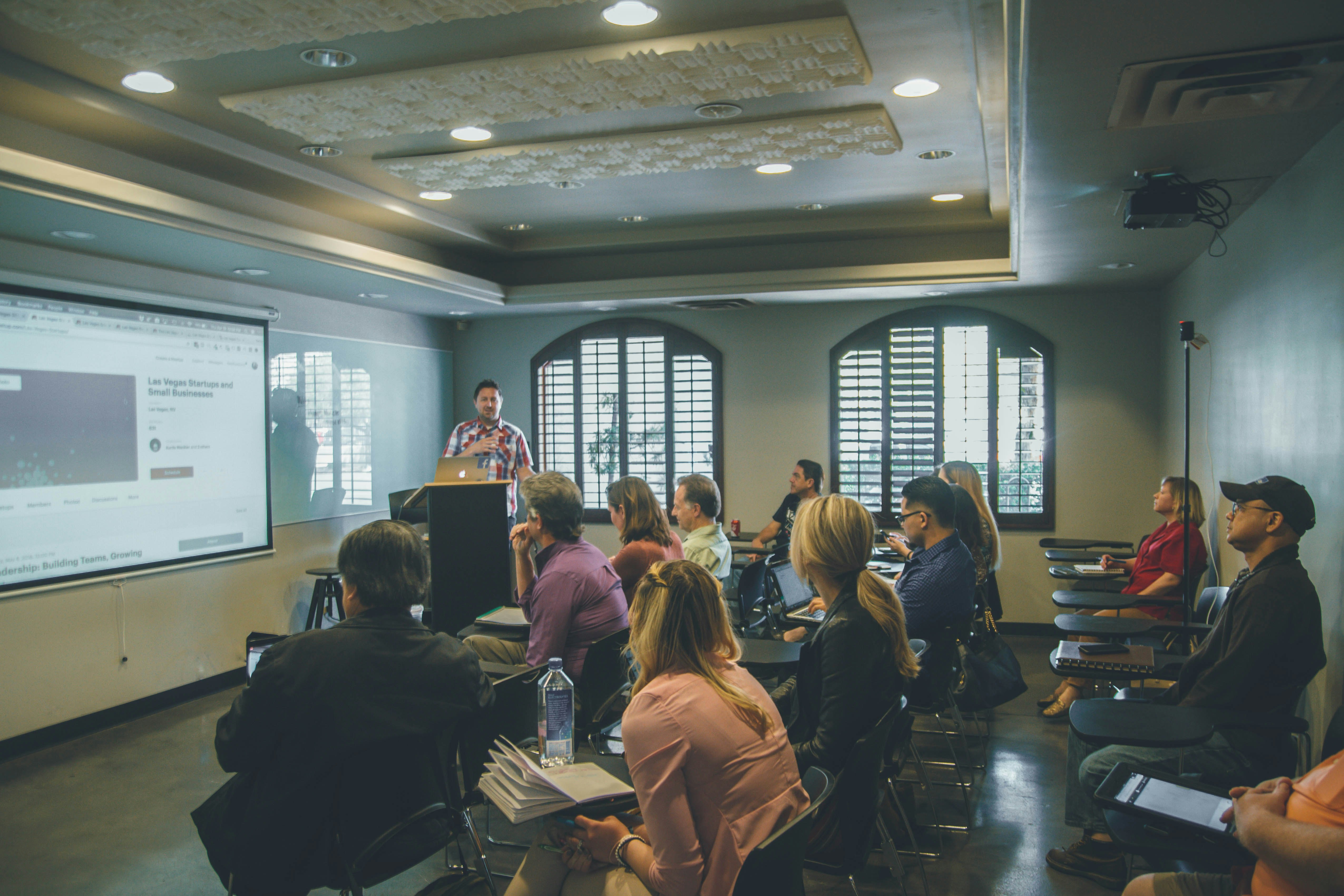
Summer courses generally have smaller class sizes, as not every student decides to or has the time to take them. Consequently, they can provide you with more personal and focused attention from the professor.
“Some classes are popular and hard to get into during the regular school year, but probably not during the summer. If you can’t get in any other time, try registering for the summer class.”
Madison Hallett for Unigo
You will want to pay attention to specific details for the summer courses you are signing up for. Some do not offer financial aid or tuition assistance.
Summer classes are short and fast-paced; therefore, there is not much leeway in terms of attendance. As a result, you might fall behind significantly and risk your grade being affected by missing even one class.
“Summer classes have an accelerated pace [so] read your syllabus carefully. Mark test dates and deadlines for major assignments on a calendar and work backwards. Don’t forget to include work shifts, concerts, and other fun stuff, so you have a clear picture of what you truly have going on. Devote a chunk of time each night to preparing for what’s coming up next.”
The Princeton Review
You will want to balance a social life in the summer, too. Summer courses are frequently short-term and compressed, so you should be able to find time to relax at the beach in between classes. Remember that summer courses allow you to get ahead of schedule and graduate sooner.

If you want to study in the USA, feel free to contact us!
The University of New Orleans, which was founded in 1958 as the first fully integrated public university in the South, is committed to providing educational excellence to a diverse undergraduate and graduate student body. The University is one of the region’s foremost public resources, offering a variety of world-class, research-based programs, advancing shared knowledge and adding to the region’s industry, culture, and economy.
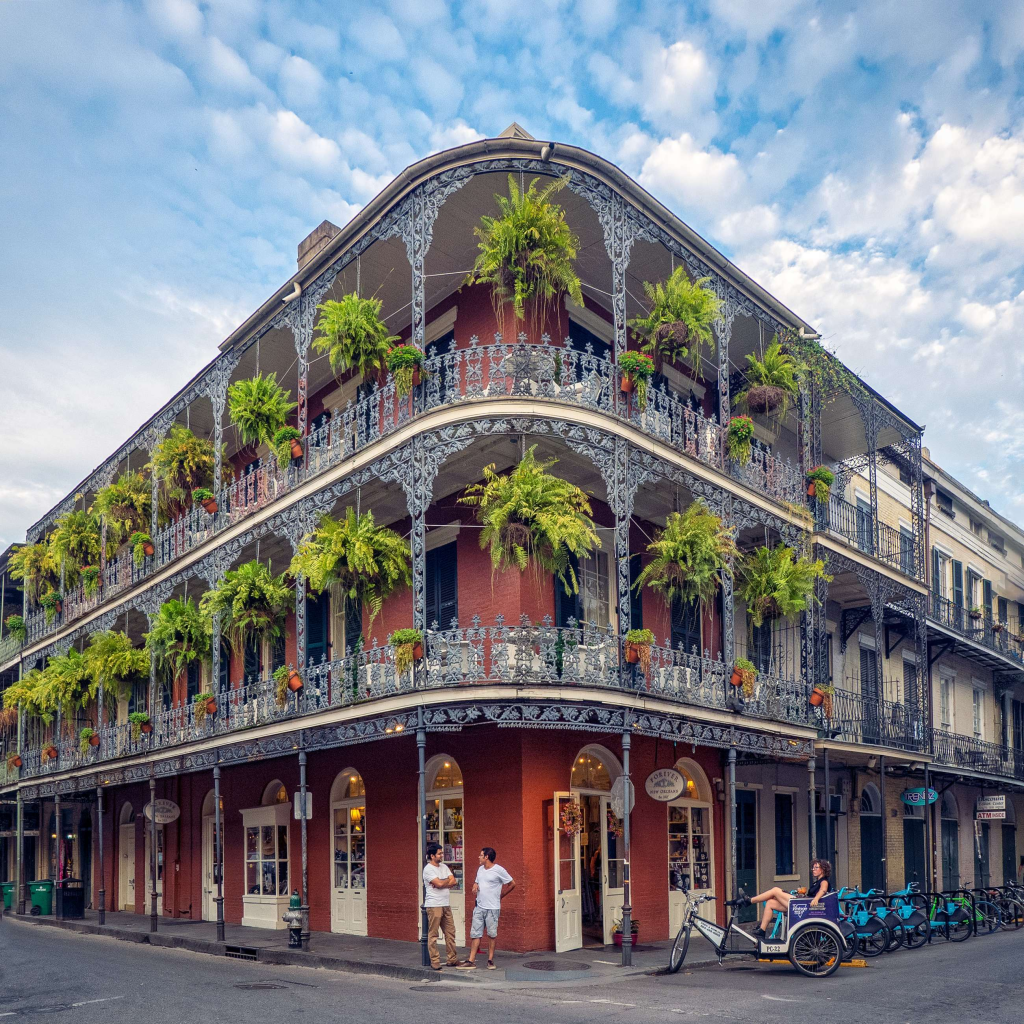
As its name implies, the University of New Orleans’ 195-acre campus lies in the most populous city in Louisiana, with arguably the most decadent and eclectic culture you won’t find anywhere else in the world. Much of New Orleans’ identity is rooted in its creole heritage and the impact of French and Spanish colonial control. UNO’s main campus is just minutes away from the French Quarter, boasting world-class food, historical charm, and exciting nightlife.
From the fairgrounds during Jazz Fest to the fancy restaurants on Bourbon Street, food in New Orleans has just as much flavor as the rest of the city. So much of the local fare comes from cajun and creole cooking, featuring plenty of seafood and spices.
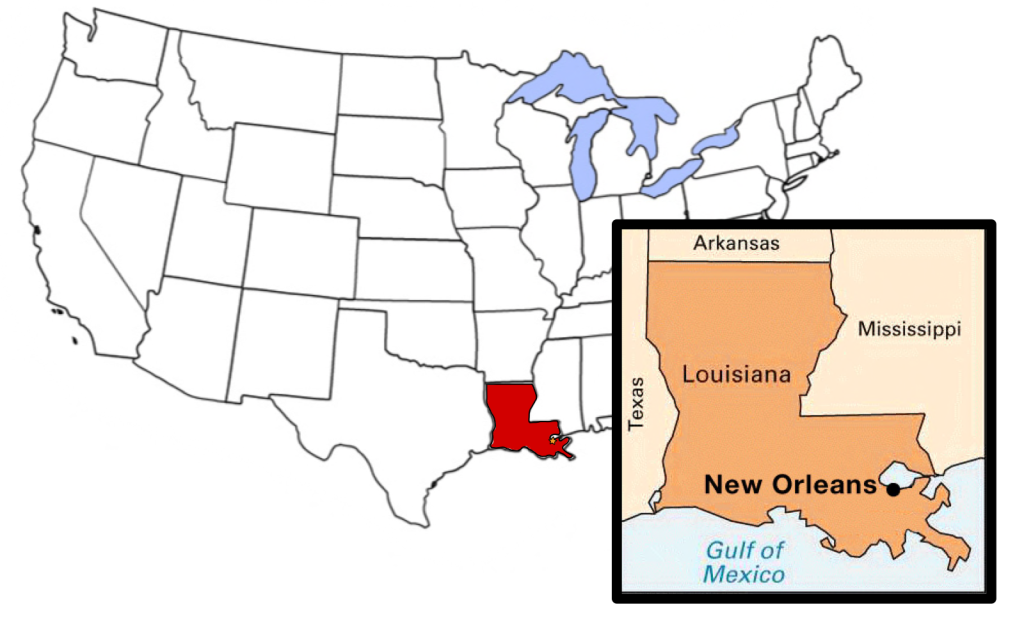
New Orleans, located in the southern United States, near the coast of the Gulf of Mexico, in the wet and marshy area of the Mississippi delta, and on the shores of Lake Pontchartrain, has a subtropical climate, where the summers, lasting from the June to September, are long, hot, and muggy with an average daily high-temperature 30°C, while the winters, lasting from the end of November to the end of February, are mild, with an average daily high-temperature 20°C.
This public, comprehensive urban research university, ranked 3rd by the Brookings Institution for providing equal access to higher education for students from all income levels, is home to around 7000 undergraduate students. An overwhelming percentage of those students say that professors are approachable and helpful when needed (80%) and care about their students’ success (80%), which is paramount as of its 19:1 student-faculty ratio.
New Orleans has a rich and eclectic culture hard to find anywhere else, but being named one of twelve “Sweet Spots for High Tech” in North America is also the ultimate destination to carry out your higher education. It offers degrees certified by the National Security Agency (NSA) and the Department of Homeland Security, houses one of only a few Schools of Naval Architecture and Marine Engineering, and UNO’s Center for Hazards Assessment, Response and Technology is the only university research center in the country that focuses on hazard mitigation.
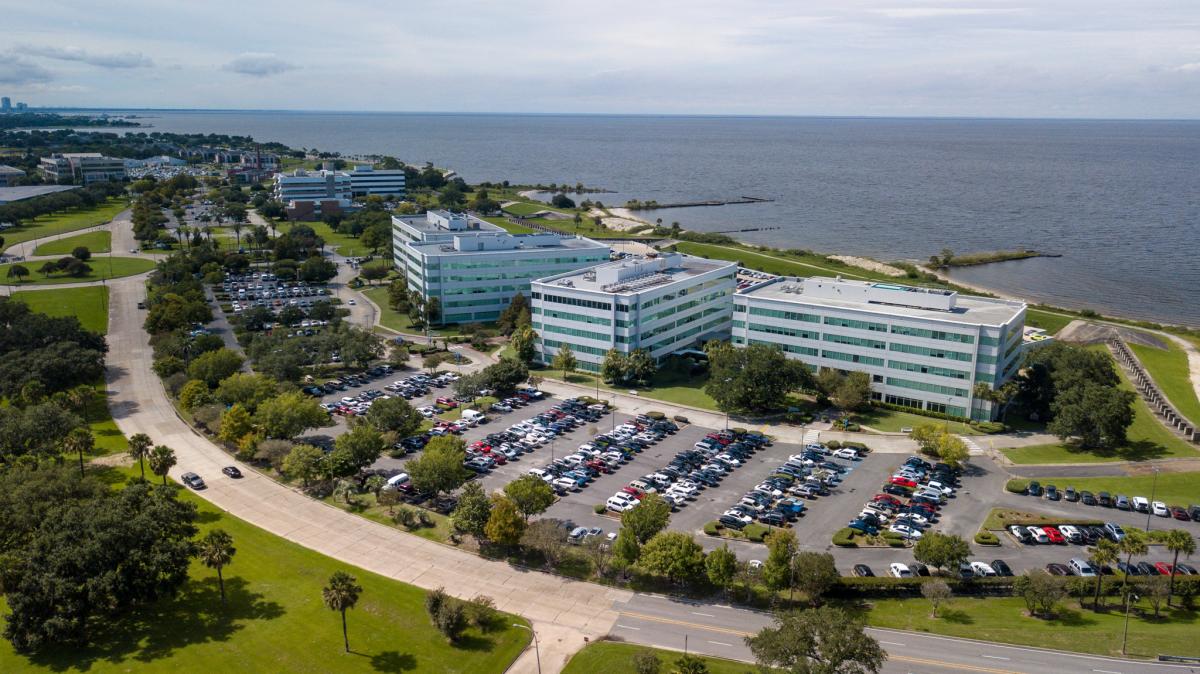
Undergraduates at the University of New Orleans can choose from nearly 50 areas of study, and graduate students can earn master’s degrees in more than 40 programs, including business, engineering, and education.
Department of Accounting
Department of Economics and Finance
Department of Management and Marketing
Lester E. Kabacoff School of Hotel, Restaurant and Tourism Administration
Department of Anthropology and Sociology
Department of English and Foreign Languages
Department of History and Philosophy
Department of Planning and Urban Studies
Department of Political Science
School of the Arts
School of Education
Department of Civil and Environmental Engineering
Department of Electrical and Computer Engineering
Department of Mechanical Engineering
Boysie Bollinger School of Naval Architecture and Marine Engineering
Department of Biological Sciences
Department of Chemistry
Department of Computer Science
Department of Earth and Environmental Sciences
Department of Mathematics
Department of Physics
Department of Psychology
The UNO Privateers’ 13 varsity teams compete in the NCAA Division 1 Southland Conference. Overall, the Privateers have won 3 team national championships and 22 conference championships.
The men’s tennis team recently won the southland conference championship title, securing their national championship bid and only falling to #2 seed and defending national champion, Florida.
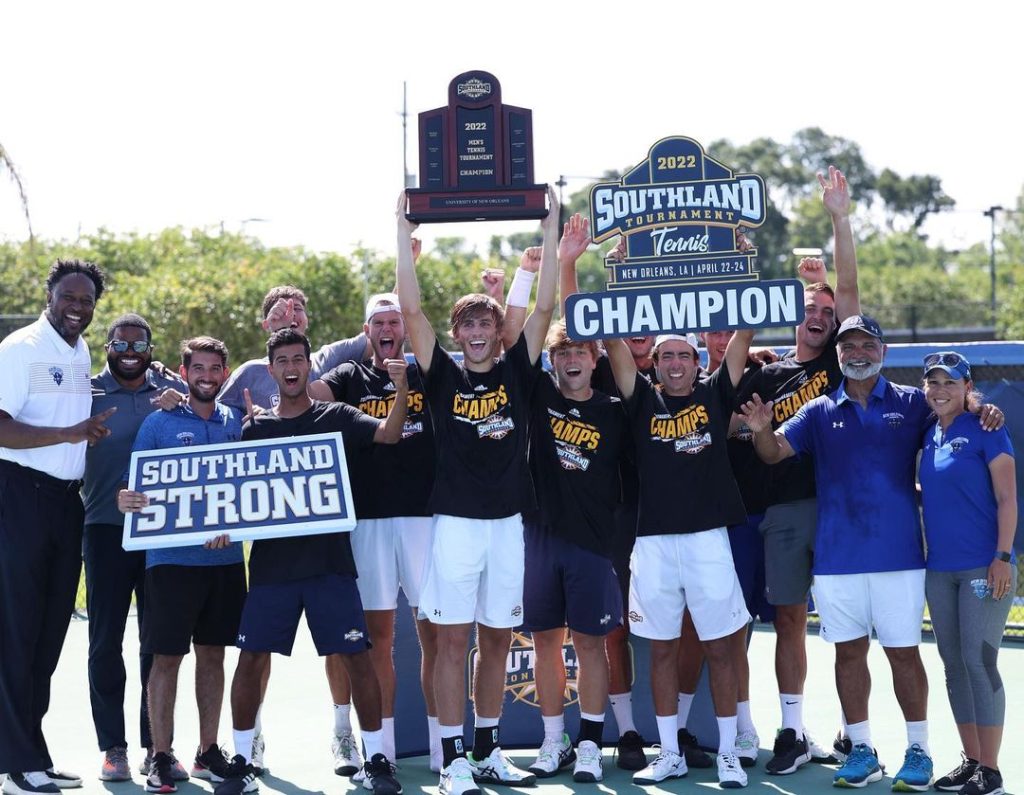
If you want to study in the USA and attend such a beautiful campus like the University of New Orleans offers, then feel free to contact us.
The Indiana University, founded in 1820, is dedicated to creating dynamic partnerships with its communities in economic, social, and cultural development and offering leadership in creative solutions for 21st-century problems. UI strives to achieve full diversity and maintain friendly, collegial, and humane environments, with a strong commitment to academic freedom.
Indiana University’s flagship campus is located in Bloomington, Indiana. Two defining characteristics have shaped this Indiana town and its people: the land and the university. The hills, forests, and lakes provide a sanctuary, one that is valued and protected. The limestone is quarried and milled by hard-working Hoosiers and turned into beautiful buildings and sculptures throughout the area and the nation. Students and faculty from across the country and the world flock to Indiana University, bringing ideas and dreams to a community that embraces them all. It’s a place that nurtures artists and scientists, farmers and philosophers, athletes and musicians. It’s a community of aspirations and inspirations, a breeding ground for transformations.
In Bloomington, the summers, lasting from the end of May to the end of September, are long, warm, humid, and wet, with an average daily high temperature above 24°F, while the winters, lasting from the end of November to the end of February, are very cold and snowy, with an average daily high temperature below 8°C.
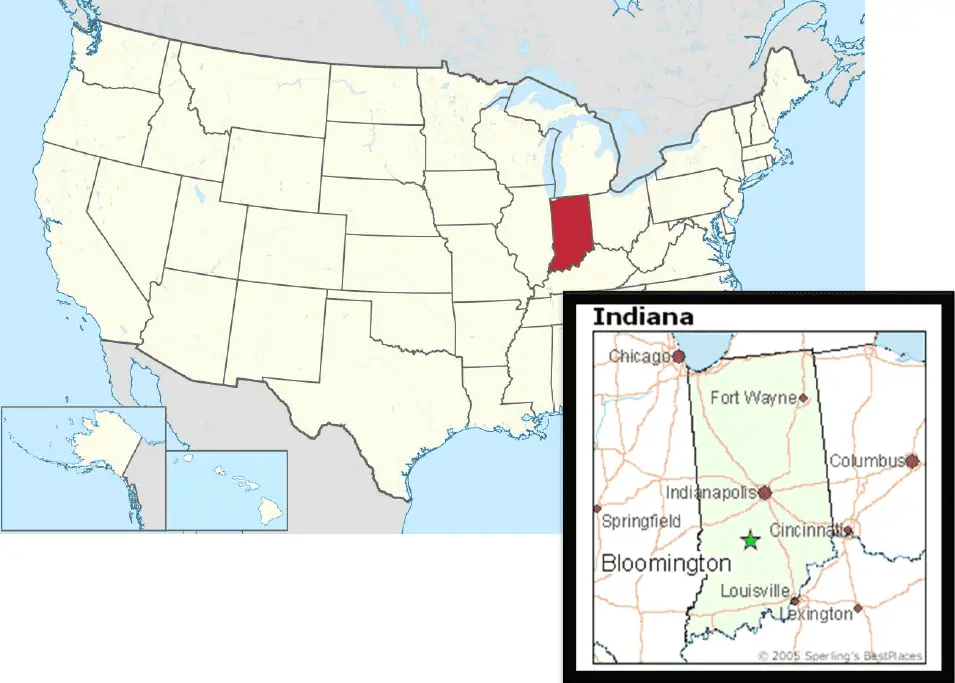
This public university, which is ranked 2nd and 32nd as the Top Public Universities in Indiana and the entire United States, respectively, is home to the world’s first schools of philanthropy and informatics, and the United States’ largest medical school. Furthermore, UI Bloomington is a mecca of music and fine arts, with the top-ranked IU Jacobs School of Music and fine arts, theatre, and entertainment offerings, staging more than a thousand performances in venues that are artistic experiences in themselves every year.

The Indiana University Bloomington is home to more than 43’000 students from over 140 countries, of which an overwhelming majority agree that their professors are approachable and helpful when needed (86%) and care about their students’ success (75%), which is paramount as of its 15:1 student-faculty ratio.
IU Bloomington has 16 degree-granting colleges and schools, as well as the Hutton Honors College, many of which are among the nation’s and world’s best.
– College of Arts and Sciences
– IU Eskenazi School of Art, Architecture, and Design
– IU Kelley School of Business
– School of Education
– IU Hamilton Lugar School of Global and International Studies
– IU Luddy School of Informatics, Computing, and Engineering
– IU Maurer School of Law
– The Media School
– School of Medicine
– IU Jacobs School of Music
– School of Nursing
– School of Optometry
– IU O’Neill School of Public and Environmental Affairs
– School of Public Health-Bloomington
– School of Social Work
– University Graduate School
The UI Hoosiers’ 22 varsity teams have brought home 25 national team titles, produced 161 NCAA individual champions, won 182 Big Ten Conference titles, and secured over 100 Olympic medals.
Baseball
Basketball
Cross country
Football
Golf
Soccer
Swimming and Diving
Tennis
Track and Filed
Wrestling
Basketball
Cross country
Field Hockey
Golf
Rowing
Soccer
Softball
Swimming and Diving
Tennis
Track and Filed
Volleyball
Water Polo
No matter where you cheer for the Hoosiers, you’ll feel the same fierce pride and undeniable sense of belonging. As a Hoosier, you already know you’re a part of something bigger than yourself. But when you show up to cheer on your team, you feel it at a far more visceral level. That’s the power of IU athletics.
indiana.edu
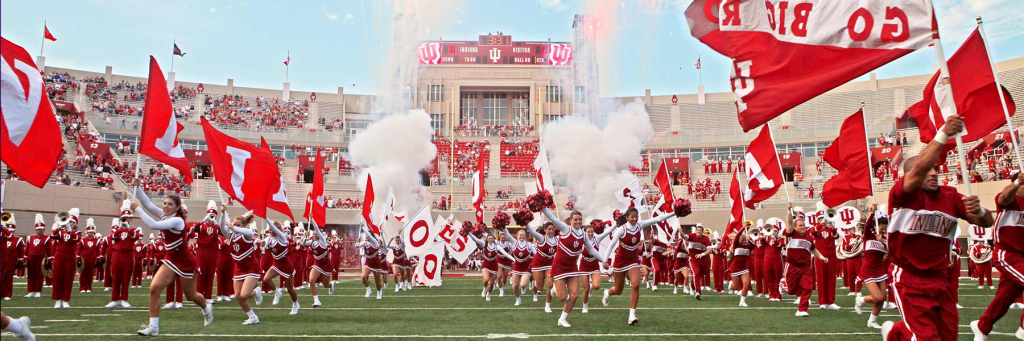
If you want to study in the USA and attend such a beautiful campus like the University of Indiana offers, then feel free to contact us.
These conversations with coaches are there for the coach to learn as much as possible about you in order to figure out whether you are a good fit for them and if they are a good fit for you.
This will be a genuine conversation of getting to know one another and the institution; very straightforward and no trick questions.
Below we will discuss the four things you should or shouldn’t do to ace your first conversation with a college coach.
Before your first conversation with an interested coach, role play with a friend or family member. Have them play the part of the coach, and make sure they ask you tough questions (for potential questions, see below) you might have to answer when talking to the coach; if you can’t role-play, practice in front of a mirror.
– How are you doing in school? What are your GPA and test scores?
– What majors are you interested in?
– What are your strengths and weaknesses as a player?
– What are you currently working on improving?
– What kind of training have you been doing?
– What are your goals?
– Why are you interested in my school and/or program?
– What are your interests or hobbies outside of your sport?
– What other schools are you interested in?
– What other schools are recruiting you?
– Why do you think you can play at this level?
– What makes you a good fit for the team?
Do your research about the school and program before your conversation, so you have a few key facts at hand to show that you are genuinely interested in their program. You can visit the school’s website for information about the school and its academic programs and its athletics website to learn more about the coaching staff and the team. Check their current record and read the latest game recaps or press releases if the team is in season.
Some questions will likely arise during your research; write them down. If you need help coming up with questions to ask, you will find some example questions throughout this article.
During your call, have a couple of different tabs for reference open, i.e., the school’s website, some articles about the team and the team roster, as well as your phone call script and your list of questions for the coach. However, suppose the computer poses a distraction. In that case, it’s best to prepare your thoughts by writing them down or with additional practice.
If your first conversation is a (video)call, find a quiet place where you won’t be interrupted.
“Coaches want to have a good, personal conversation. If your family wants to listen, that’s fine, but make sure that you aren’t distracted.”
Christopher Sartorius (division 1 men’s and women’s basketball coach)
If you feel more comfortable taking the call alone, let your family know you need to be in a quiet room without distractions and fill them in on the call afterward.
When the coach introduces their program, take notes and ask the questions you have prepared as needed. If you need help coming up with questions to ask, check out a few below.
– What does a typical day/week/season look like?
– How often & where does the team practice?
– What’s the atmosphere like (practice/gameday)?
– What are your expectations of your student-athletes in the off-season?
– Does the team travel? How does the team travel? Will I travel with the team my freshman year?
– What goals do you have for the team?
– What’s your philosophy/goal?
– Where do you see me fit in?
– How is your recruiting class looking for my graduation year?
– What’s the best way to update you on my progress?
– Are there any camps, combines or showcases you’d recommend I go to?
– Where do you typically evaluate recruits?
– Are athletes on your team allowed to participate in more than one sport?
– If I come to your school for an unofficial visit, would you be able to meet with me?
– How many players for my position will you be recruiting in my graduation year?
When the coach introduces the school, take notes and ask the questions you have prepared as needed. If you need help coming up with questions, check out a few regarding academics, cultural fit, and social fit below.

– Do you offer majors I’m interested in?
– What are the most popular majors for athletes on your team?
– Are there any specific majors that would interfere with the athletic schedule?
– Does your team have an academic advisor and/or tutoring available to athletes?
– Are team study halls required or recommended?
– What are academic goals I should strive for to meet the criteria of your university?
– What is the typical class size on campus?
– What are the admissions requirements for the school and/or for student-athletes?
– Do most of your players graduate in four years?
– How do the athletes on your team interact with each other?
– Does the team hang out together outside of practice and games?
– What is housing like on campus? Is the housing situation different for athletes?
– Are student-athletes required to live on campus all four years they attend school?
– Do teammates typically live together on or off-campus?
– Do athletes stay on campus during the summer? What about winter or spring breaks?
– Is it realistic to have a part-time job, volunteer, or get involved with other clubs during the off-season?
– What are the biggest challenges your student-athletes face at school?
– What is campus life like?
– Are there any religious requirements that I need to meet?
– Does the school offer meal plans for athletes?
Some coaches don’t like talking about the budget during the first conversation.
However, if the coach brings it up, feel free to talk about it and ask your prepared questions. If you need help coming up with questions to ask, check out a few below.
– What does it take to earn a scholarship with your program?
– How many scholarships do you have available for my graduation year?
– What happens if I get injured? Will I lose my scholarship?
– If freshmen aren’t eligible for scholarships, will I be eligible for scholarship money next year?
– Are there work-study programs I can sign up for? Is it possible for student-athletes to have a part-time job or work-study position on campus?
– What type of academic and athletic scholarships are available for student-athletes? Are my GPA and test scores on track to qualify for a merit-based scholarship or grant?
– Does the school offer additional financial aid?
– Who is the main point of contact in the financial aid office that my family can talk to if we have more questions about paying for college?
We have already discussed questions you can and should ask college coaches during your first conversation. However, as we have already mentioned earlier, there are topics you should avoid when starting to talk to a coach.
As we have already mentioned, you should avoid asking for a scholarship. Instead, you need to develop a relationship with the coach before you start asking them for money. A way to ease into the conversation could include asking questions about academic scholarships, financial aid, and what it takes to earn a spot on the team or qualify for an athletic scholarship.
Avoid asking anything you can figure out with a quick google search, i.e., what division a program is or what conference they compete in.
⬇️ Check out the video below for more questions to avoid ⬇️
While this may seem a lot, the coach will often carry the conversation and tell you all about their program, so don’t worry, be yourself, and enjoy the ride!
With more than 77’000 competing in the NAIA (National Association of Intercollegiate Athletics), over 60’000 in the NJCAA (National Junior College Athletics Association), and around 500’000 competing in the NCAA (National College Athletics Association), well over half a million students choose to go into college sports in the United States alone. Making up around 17% of college students, student-athletes, and college sports are more popular than ever, and it isn’t hard to see why!
Explore some of the benefits that participating in college sports may bring.
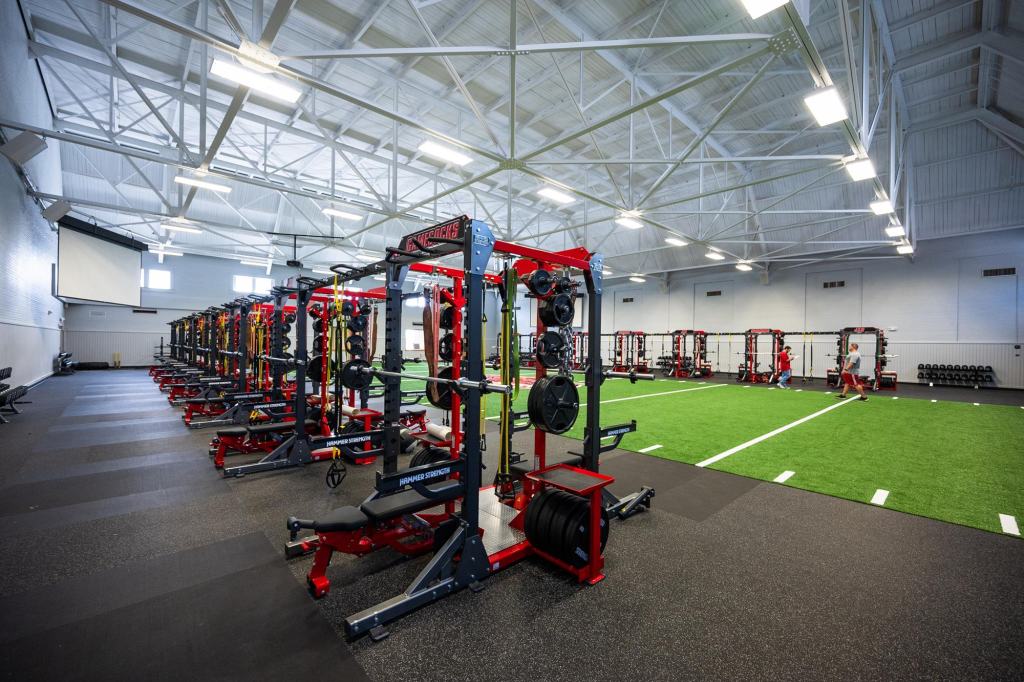
Student-Athletes have access to State-of-the-Art facilities and equipment, a high level of coaching, and one-on-one training both on the field and in the weight room. Some of the facilities you will have at your disposal are practice gyms, courts, fields, pools, weight rooms, various rehab facilities, and knowledgeable staff to go with them. Only going pro will grant you access to better training than at the collegiate level.
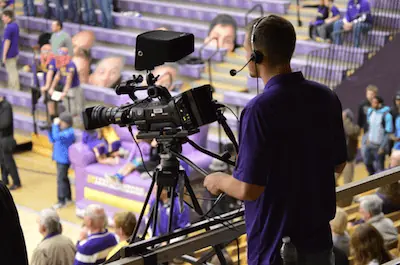
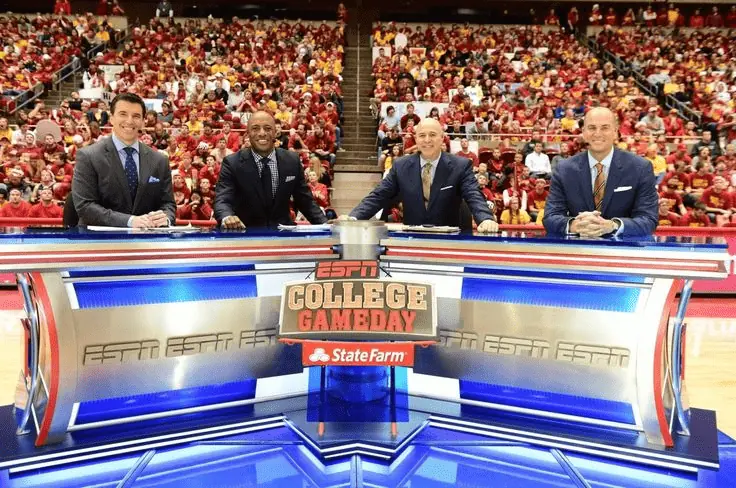
Most college games are broadcasted live, some even nationally or worldwide, allowing you to be seen by many professional coaches. While many universities have their own local broadcast channel, some sports, such as football and basketball, are also broadcast on national media like ESPN, ABC, NBC, CBS, PBS, Fox, and more. This exposure will open doors both into professional sports and professional work-life.
Building and maintaining relationships is an extremely important skill college athletes learn. The relationships you build with your teammates, coaches, administrative staff, and professors will be for a lifetime. They will be the people you invite to your wedding, reference on your resume, and help you get job opportunities.
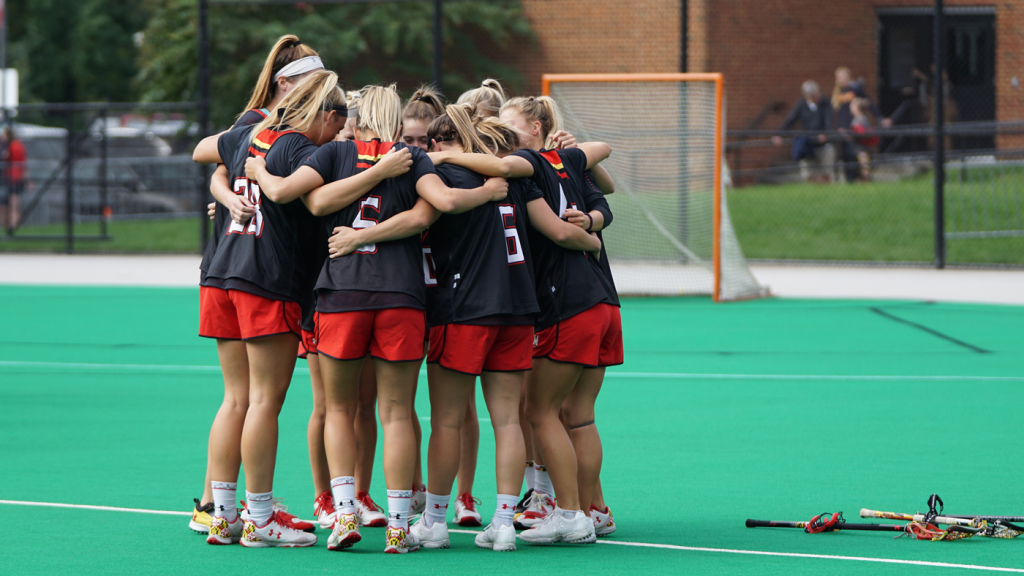
As a college athlete, you learn leadership, confidence, discipline, effective time management, and teamwork, which prepare you for the working world. These are the skills companies look for when hiring, giving you an edge over your competition.
Leadership is forged within teams. Especially the Captains of college sports teams become tried and tested leaders. A college captain is a liaison between coaches and players. They must work harder than everybody else; they learn to confront their teammates, on and off of the field, and all that in an intense, emotional environment.
Confidence building is a huge aspect of college sports; you are essentially performing on a stage. Getting yourself out there, working hard, the discipline of showing up every day, and seeing yourself improve over the years all feed into your confidence. College sports provide you the platform to build the confidence you will take into your post-college life to help you feel ready for life’s experiences. When you are confident, you are more likely to move forward with people and opportunities — not back away from them. And if things don’t work out at first, confidence helps you try again. Additionally, employers will be more interested in you, as they can benefit from confident employees because they are positive contributors, productive, good motivators, and make great role models.
Structure and discipline in college sports forge habits that are not quickly forgotten. You may survive, but you cannot thrive in both the classroom and on the field unless you develop a disciplined lifestyle. In addition, these lessons make the transition after college to a career and a family much easier.
With all that student-athletes have to juggle in their day — practice, weight room, rehab, classes, labs, homework, and social life — being a student-athlete is very well compared to a full-time job. Therefore, the only way for student-athletes to succeed is to be highly organized and effective in their time management.
Employers seek out candidates with strong teamwork skills for many reasons — they demonstrate leadership, collaboration, and good communication.
College sports are team-oriented, which is why employers look positively at applicants who have played collegiately. Potential employers know you have been in an intense environment for four years and have had to work as a member of a team.
Last but not least, playing sports benefits your body and mind – it strengthens your bones, lowers cholesterol, and decreases your risk of stroke, high blood pressure, and diabetes.
Check out this TED Ed video for more benefits!
If you want to study in the USA and take benefit of everything that college sports have to offer, then feel free to contact us
Oslo, Norway and Cologne, Germany – 22 March 2022
Keystone Education Group (“Keystone”) has acquired uniexperts, a German student-athlete placement agency as it continues to grow Keystone Sports as Europe’s strongest college sports recruiting solution for student-athletes looking to study in the US.
As part of its services, Keystone Sports has helped over 9240 students over the past 24 years to play sports and study in the United States, generating over 582 million USD in scholarships for students placed during this period.
“We are excited to welcome uniexperts into the Keystone Sports family. Our mission with Keystone Sports is to help student athletes in Europe and around the world to find the best US university for them to pursue both their academic and athlete dreams. Adding uniexperts will help us significantly expand our footprint and capabilities in Germany”, said Erik Harrell, Keystone CEO.
For uniexperts managing directors Stefan Wirtz and Roger Thiele, alignment with their mission was central to their decision.
“Joining Keystone Sports was a natural choice for us as we will be able expand our services and further our mission of helping guide students through the international education journey,” said Wirtz.
“Student-athletes will benefit from the combined competences of the world’s most experienced athletic recruiting consultants. They will be served with a speed and scale currently not offered by any other agency in the market,” said Thiele.
Keystone is trusted by more than 110 million unique prospective students every year to help students and learners make one of the most important decisions of their lifetimes, namely, which higher education degree program or course to attend.
In turn, Keystone helps over 5 500 education institutions reach, recruit, and enroll prospective students in more than 190 countries, across 460 student websites, including Masterstudies.com, Bachelorstudies.com, Educations.com, Studentum.se, and FindAMasters. Keystone also operates a range of other global student recruitment services, including UniQuest, Blueberry.nu and Keystone Sports.
Headquartered in Oslo, Norway, Keystone is backed by Viking Venture and Verdane, two leading Nordic venture firms. With offices across the Nordics, Germany, and the UK, Keystone has an international staff of more than 550 employees.
Keystone Sports is a division of Keystone Education Group, with a mission to connect international student-athletes with colleges in the United States. Keystone Sports is comprised of 63 employees in 7 countries, most of whom are former college student-athletes themselves. They are experts in soccer, tennis, golf, track & field, swimming, basketball, and 15 additional sports. We are Europe’s strongest college sports recruiting solution for student-athletes looking to study in the US.
Since 1998, our agencies, CSUSA (Norway), AGM (Spain), Sport-Scholarships (Germany), Tennis Smart (UK) and uniexperts (Germany), have sent over 9240 international student-athletes to over 820 Colleges in the US and Canada, securing over 582 million USD worth of scholarships.
Colorado State University-Pueblo, which was founded in 1933 as Southern Colorado Junior College, is dedicated to interdisciplinary learning and entrepreneurship that elevates their people and their community, creates educational opportunities, fosters unique collaborations, and supports inclusion, access, and affordability as a gateway to the world.
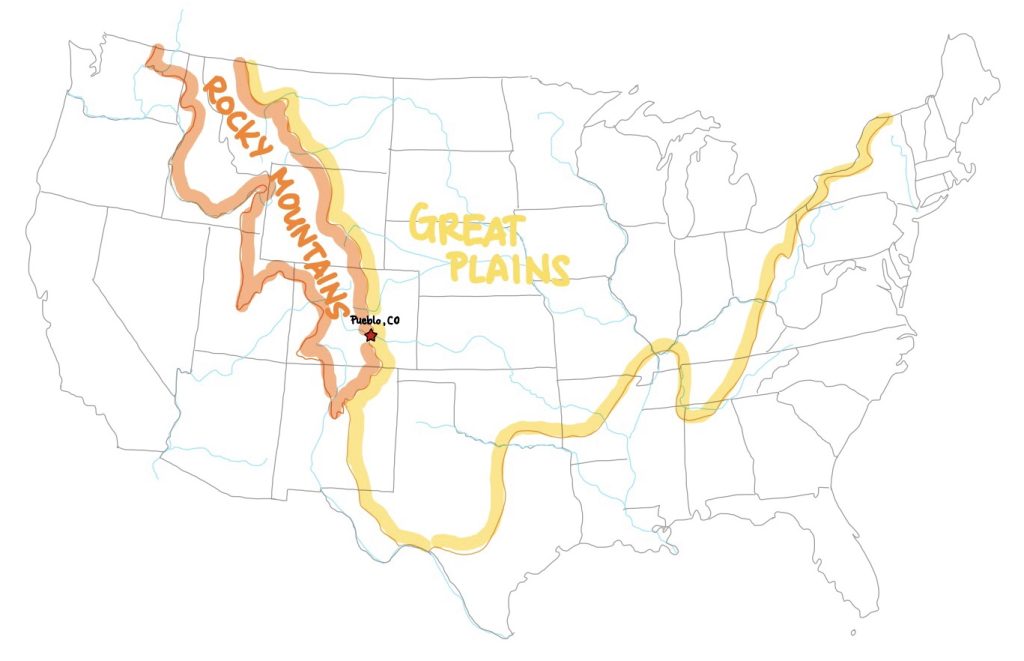
CSU-Pueblo’s 275-acre campus is located in the southern part of Colorado, near the foothills of the Rocky Mountains and just a short drive to Denver or Colorado Springs. Pueblo is where small-town charm meets big-city fusion. The town, most commonly known for its mining-history, is home to a dynamic mix of arts and culture, shopping and dining, sports and entertainment. Pueblo’s location on the western edge of the Great Plains and front range of the Rocky Mountains, lend the town its steppe climate, with four distinct seasons. While summers are hot and dry, winters are usually mild and snow melts away within a couple of days due to the high altitude.
The public state university in Colorado, which is ranked second for Best College Athletics in Colorado, and is the only school in Colorado included in a partnership with the Smithsonian Institution, offering month long internships to their students, is home to around 4’000 students. An overwhelming percentage of those students say that professors are approachable and helpful when needed (86%) and care about their students‘ success (86%), which is paramount as of its 15:1 student-faculty ratio.
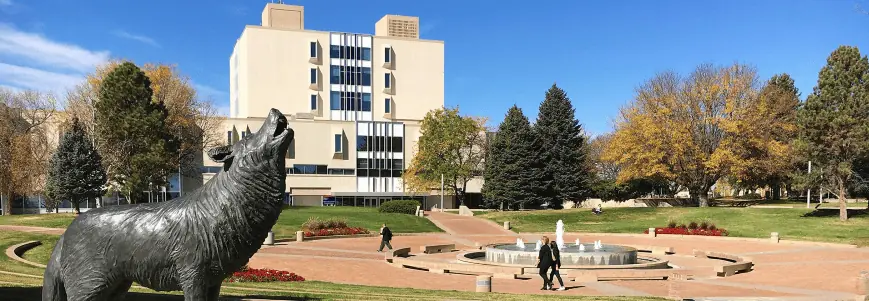
Colorado State University-Pueblo offers thirty-five undergraduate degrees spread across its seven Colleges and Schools, including the, AACSB accredited, Hasan School of Business, which ranks in the top 15 percent internationally, a thriving engineering program, which was ranked in the nation’s top 100 by U.S. New and World Report, and a Media Communication Department, offering hands-on experiences through an on-campus radio station, and on-line as well as print publications.
– Science, Technology, Engineering, and Mathematics
– Humanities, Arts & Social Sciences
– Hasan School of Business
– School of Nursing
– School of Education
– Health Sciences & Human Movement
– Extended and Online Studies
The CSU-Pueblo Thunderwolves’ 22 varsity teams compete in the oldest NCAA Division II Conference, the RMAC (Rocky Mountain Athletic Conference). Overall, the Thunderwolves have won numerous conference championships, 7 regional championships and 2 national championships, including that of their Football Team in 2014.
“Colorado State University-Pueblo athletics has a rich tradition of its former student-athletes playing professionally. CSU-Pueblo alums have made it to the highest levels, boasting numerous professionals in football, baseball, soccer and basketball.” (gothunderwolves.com)
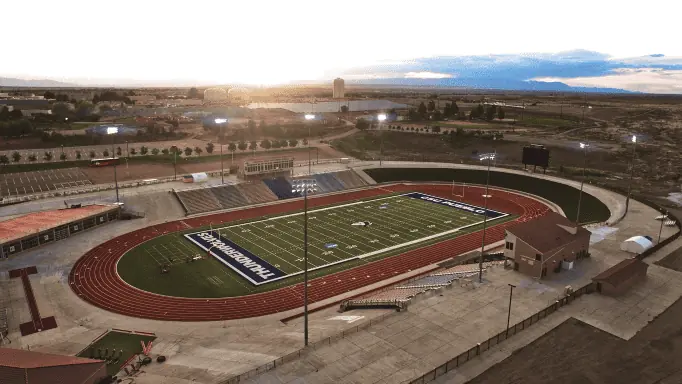
If you want to study in the USA and attend such a beautiful campus like Colorado State Pueblo offers, then feel free to contact us.
The Florida State University, which was founded in 1851, making it the oldest continuous site of higher education in Florida, is dedicated to excellence in teaching, research, creative endeavors, and service. In addition, FSU strives to instill the strength, skill, and character essential for lifelong learning, personal responsibility, and sustained achievement within a community that fosters free inquiry and embraces diversity.
Florida State University’s main campus is located in Florida’s capital, Tallahassee. The city houses impressive antebellum architecture, parks, and gardens, as well as a vibrant college community comprised of over 70’000 students from the two major and several smaller universities/colleges. Tallahassee’s location on the Floridian Panhandle makes for its humid subtropical climate; therefore, long summers, short, mild winters, and drier spring and autumn seasons await you.
This public research university, which is ranked eighteenth for Best Public University and is classified as a Research University with Very High Research by the Carnegie Foundation for the Advancement of Teaching, is home to over 43’000 students. An overwhelming percentage of those students say that professors are approachable and helpful when needed (82%) and care about their students’ success (76%), which is paramount as of its 21:1 student-faculty ratio.
“Florida State offers [276] leading undergraduate, graduate, and professional programs. Many units have programs that consistently rank among the nation’s top twenty-five public universities, including those in Physics, Chemistry, Statistics, Ecology and Evolutionary Biology, Meteorology, Political Science, Psychology, Sociology, Criminology, Information, Creative Writing, Public Policy, Business, and Law.” (fsu.edu)
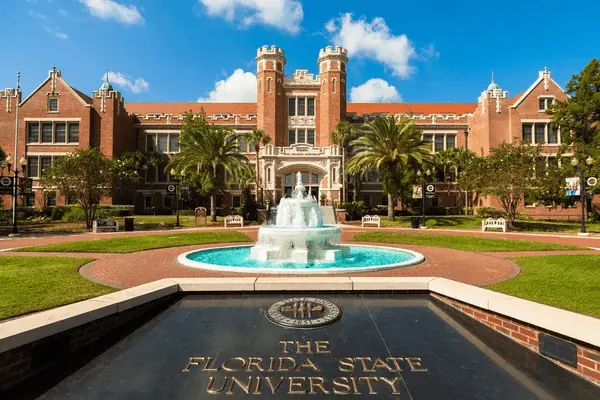
FSU houses over 55 Research Centers and Institutes, as well as over 15 Colleges and Schools:
– College of Applied Studies
– College of Arts and Sciences
– College of Business
– College of Communication and Information
– College of Criminology and Criminal Justice
– College of Education
– FAMU-FSU College of Engineering
– College of Fine Arts
– College of Health and Human Sciences
– College of Law
– College of Medicine
– College of Motion Picture Arts
– College of Music
– College of Nursing
– College of Social Sciences and Public Policy
– College of Social Work
– Dedman College of Hospitality
– Jim Moran College of Entrepreneurship
The FSU Seminoles’ 20 varsity teams compete in the NCAA Division 1 Atlantic Coast Conference. Overall, the Seminoles have won 19 team national championships, more than 100 team conference championships, and numerous individual national and conference titles, making them one of most competitive collegiate athletic programs in the nation. Most recently, the Women’s Soccer became National Champion in the fall of 2021.
“Seminole athletics is recognized as one of the nation’s top all-around programs having finished 13 of the last 14 seasons ranked among the 20 best programs in the country, including 12 among the top 15.” (fsu.edu)
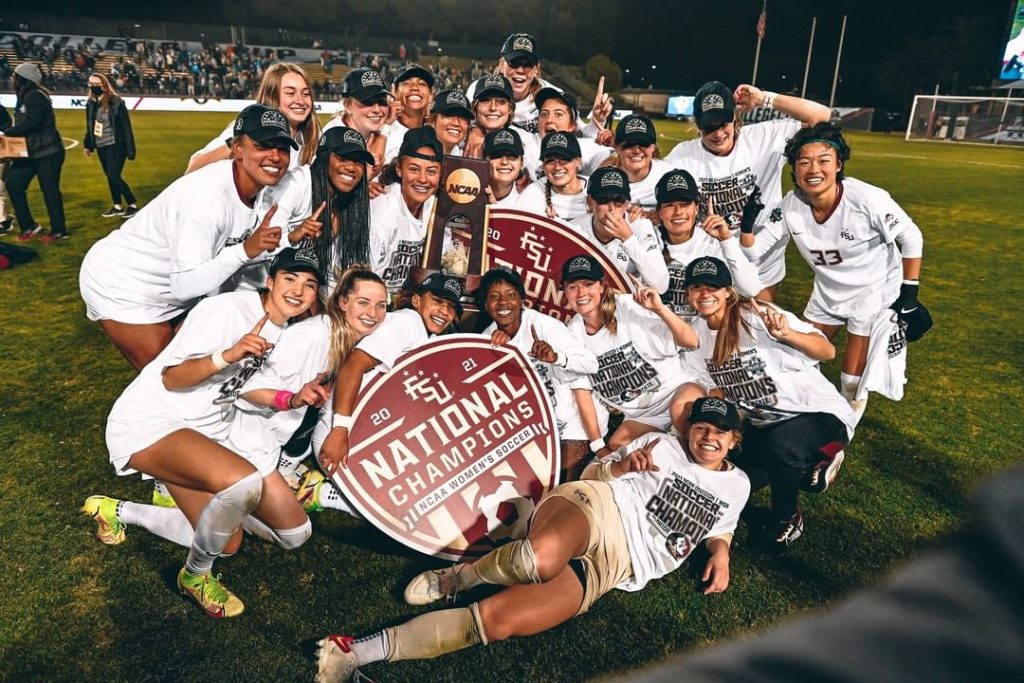
Florida State University is one of the most impressive institutions in the USA with a historical background that only a few other schools can reach.
If you want to study in the USA as well and play for championchips with your team, then feel free to contact us.